How to Ask Better Questions as a Leader
I get asked this one all the time: how do you ask better questions? Whether you’re leading a team, mentoring a young leader, or just trying to have a conversation that actually goes somewhere, learning to ask the right question may be the most undervalued skill in leadership.
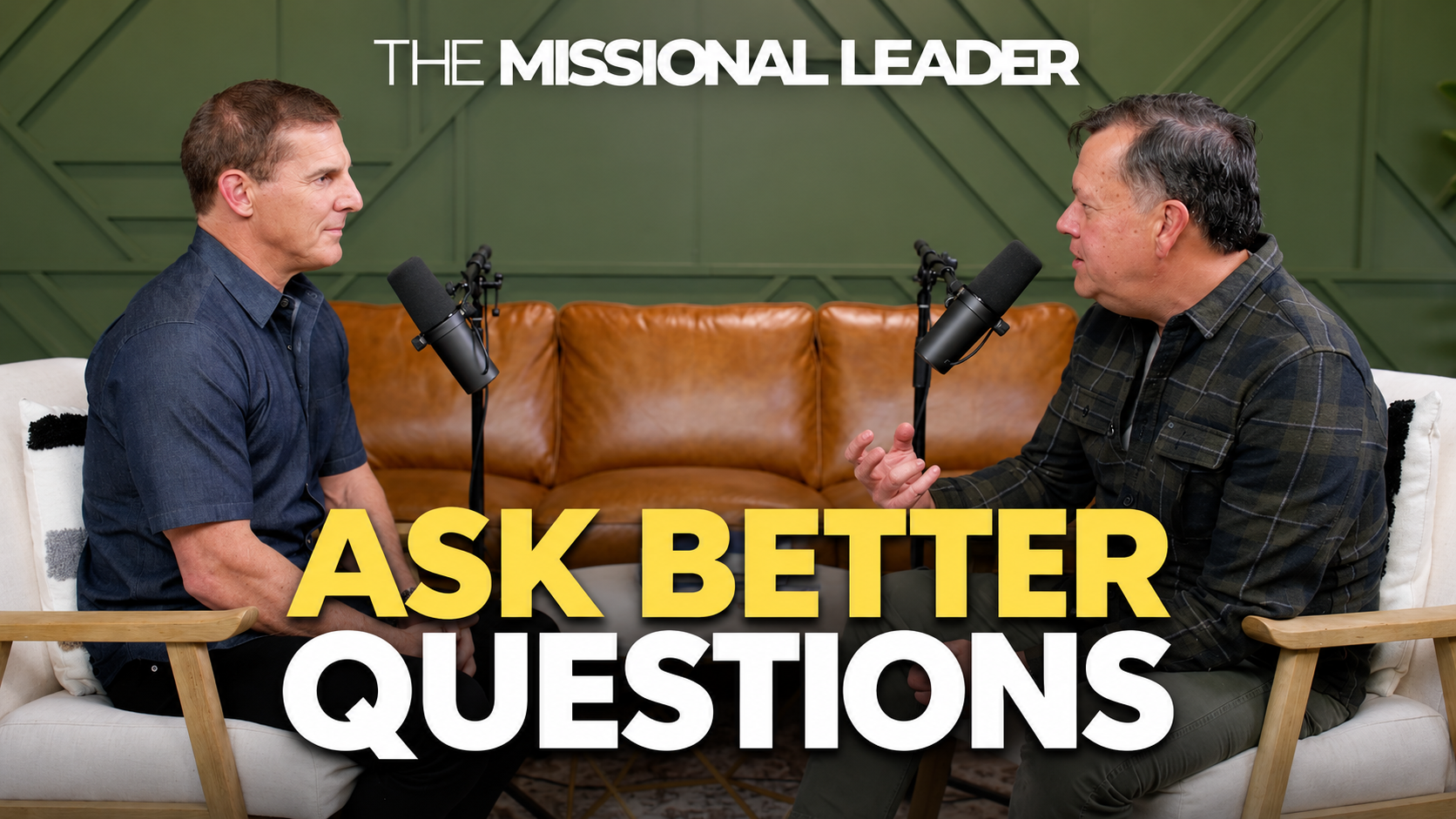
So I sat down with my friend Craig Groeschel and asked him to walk me through his process. Craig hosts one of the most listened-to leadership podcasts in the world, and when you’re across from him, you feel the difference. I love how he pulls things out of you that you didn’t know were in you. Here’s what he does, and how you can use it in your next conversation with a staff member, a mentee, or your kid at dinner.
What makes a question actually pull something out of someone?
Curiosity, and then going one level beneath the obvious. When I asked Craig how he gets guests to say things they’ve never said in another interview, he told me his old habit was to over-prepare by reading everything a guest had written. He still does some of that, but the shift came when he started trusting curiosity over preparation.
“I try to be just ridiculously curious,” he said, “and to find whatever their expertise is, and then go a level beneath it and then a level beneath that.”
The practical move is simple. When someone says something helpful, don’t move on. Ask why they think that, and ask what in their life brought it out. Craig told me he’ll ask four questions on the same subject if he senses there’s something underneath that the guest hasn’t named yet. The marker that he’s done his job well is when a guest tells him, “You asked me questions no one has ever asked me before.”
That’s the goal. If you’re mentoring a young leader and they walk away saying you asked them something no one else had, you’ve done something most leaders never do.
Why does restating what someone said make the conversation go deeper?
Because it does three things at once. It confirms you heard them, it tightens what they said so they can use it, and it opens the door for you to go one layer further.
In the full episode, Craig also walks through how he decides when to interrupt, how he uses storytelling in his preaching, and the one thing that drives him crazy about bad interviews.
I notice Craig doing this in everyday life, not just on a podcast. We’ll be on a hike and I’ll say something in my own long, academic way, and he’ll turn around and give it back to me in two sentences. It’s clearer than how I said it, and sometimes it’s better than what I meant.
He told me his reasons for restating are layered. Here’s what I gleaned from watching him do this. First, he wants to know if he actually understood. Second, he wants to make the idea portable, tight enough that he can remember it and use it later. Third, and this one surprised me, he’s sometimes adding a small nuance of correction. He loves the way you said it, but he’s offering a side you didn’t see. Fourth, restating creates what he called a floor you’re both standing on, so he can then go deeper into the basement.
That image stayed with me. Most of us never build the floor. We skip from topic to topic without ever confirming we’re on the same page, which is why so many leadership conversations feel busy but don’t move anyone.
How do you avoid asking the same obvious question everyone else asks?
You ask the opposite. Craig pulled this move on me during our conversation, and I didn’t catch it until later.
He told me his internal rule: “A lot of times I’ll say, what’s the most obvious question? Don’t ask it. Everyone else asks that one. Ask the opposite.”
During our conversation , I had been talking about what makes a great leader, and Craig flipped it by asking how I know when someone isn’t one. My brain had to go somewhere it hadn’t gone before, and I said things I wouldn’t have said if he’d asked the straight version.
If you’re sitting down one-on-one with someone this week, try it. Instead of asking what’s working, ask what’s quietly not working. Instead of asking what they want, ask what they’d walk away from. The jar is the point. As Craig put it, if he doesn’t take you somewhere you didn’t expect, you won’t say something no one expected.
How do stories and emotion fit into asking better questions?
People don’t act on information. They act on feeling. Craig teaches communicators to ask three things of every message: what do we want people to know, what do we want them to feel, and what do we want them to do?
Most leaders stop at know. A better communicator adds do. But if you skip the feel, Craig told me, you won’t get the do. His example was blunt: telling someone they should eat better doesn’t move them, but telling someone they’ll die if they don’t eat better does .
In an interview, this is why he pushes for an example or a story once a principle lands. He compared it to the face scan on your phone, the one that has you turn your head so it captures every angle. A principle is one angle, and the story turns the face.
For those of us who teach or preach, this changes how we mentor too. When a young leader tells you what they believe about leadership, don’t just nod. Ask for the moment that taught them, because the story is where the conviction actually lives.
How does Craig prepare so the right story shows up at the right time?
He keeps the file open longer than most of us do. When I asked how his mind pulls the right illustration on the fly, he told me he’s already working on a sermon series three months out. On the day we sat down, he had filed open for messages he won’t preach for another quarter.
The method isn’t mystical. Because the file stays open for weeks, anything he reads, hears, or experiences in that window can get dropped in, and his brain is primed to notice material that fits. If you only start thinking about a talk the week you give it, you’ve narrowed the window on your own memory.
In a live conversation, he does something different: he reads the other person’s face. If they look glazed over and he senses he’s losing them, he’ll raise his voice, shift to an example, or hand the question back and let the other person talk while he listens for how to land the next thought with more punch.
What are the signs of a bad interview, and what should you do instead?
Craig named two. The first is an interviewer who talks too much. The second is an interviewer who makes it about themselves and feels the need to one-up the guest.
His correction is to add value without competing. When he’s a guest on someone else’s show and wants to contribute a thought, he frames it to complement what the host said, not to prove he’s smart. His standard is that a good interview should be one hundred percent focused on pulling brilliance out of the other person and making them look great.
That standard works well beyond podcasting: in staff meetings, in board rooms, and in the car with your teenager. If your questions help the other person sound smarter after answering than before, you’re leading well. If your questions exist so you can show what you know, you’re not interviewing, you’re performing.
The scriptural ground under this is older than any podcast: “Let every person be quick to hear, slow to speak, slow to anger” (James 1:19, ESV). Most of the leadership failures I’ve watched over nearly four decades of ministry trace back to a leader who was slow to hear and quick to speak. What Craig is describing is really just James 1:19 applied to a conversation.
What should you ask yourself before your next hard conversation?
Three questions, drawn straight from what Craig walked me through:
- What’s the most obvious question here, and what would the opposite of it sound like?
- If this person says something true but long, can I say it back to them in one tight sentence so they can carry it with them?
- Do I want them to know something, feel something, and do something, or am I stopping at know?
That’s the whole discipline: curiosity underneath the first answer, restating to build a floor, flippingg the obvious, and pulling for the story that makes the principle land.
Try one of these this week
Pick one conversation on your calendar: a staff one-on-one, a mentoring coffee, or a dinner with your spouse. Walk in with one obvious question written down, and the opposite of it written underneath, then ask the opposite one. When they answer, restate what they said in a single sentence and ask them to go one level beneath it. See what comes out that wouldn’t have come out otherwise.
And if you want to hear all of this in Craig’s own words, the conversation goes further than I can here. You’ll also hear the question nobody ever asks and the worst interview Craig ever did.
If this was useful, follow The Missional Leader wherever you listen, and send me a note telling me what the opposite question surfaced. I read them.